
zaterdag 31 mei 2014

Iran Reports First Death From MERS Virus

The IRNA news agency quoted Health Ministry official Mohammad Mahdi Gouya as saying the virus killed a 53-year-old woman in Kerman, a city in southeastern Iran. On Wednesday, the daily newspaper Hamshahri quoted Gouya as saying two sisters in Kerman contracted the virus.
MORE AT BOSTON.COM
dinsdag 27 mei 2014
MERS Watch: No Saudi Cases for 2 Days

For the second day in a row, Saudi Arabia is not reporting any new cases of the Middle East coronavirus (MERS).
The hard-hit nation's health ministry reported three cases Friday, four on Saturday, and another four on Sunday, before reporting none Monday and none today.
It's the first time in months that Saudi Arabia has not had a new MERS case. The country now has a cumulative total of 562 cases, including 180 deaths, since the virus was first recognized in 2012.
zondag 25 mei 2014
Why a MERS Vaccine Won't Be Easy

Originating on the Arabian Peninsula, MERS has been carried via travelers to the United States (two reported cases), North Africa, and Malaysia, as well as a handful of European countries.
Adding urgency to the anxiety, the annual pilgrimage to Mecca in early October will draw more than a million people through the city of Jeddah, the outbreak's "ground zero."
With other dangerous diseases, like smallpox, polio, and measles, vaccines provide protection and stop transmission. So why can't we just vaccinate people against MERS and wipe the disease out before it spreads further?
READ ON AT NATIONAL GEOGRAPHIC DAILY NEWS
MERS-patiënten aan beterende hand

Half juni wordt het bloedonderzoek afgerond van de tachtig Nederlanders die in contact geweest zijn met de twee mers-patiënten. Gedurende de eerste veertien dagen na het laatste contact met de patiënten moeten zij alert zijn op klachten en mogen zij ons land niet verlaten.
Dat stelt dr. Aura Timen, hoofd van het Centrum Landelijke Coördinatie Infectieziektebestrijding van het RIVM. „Half juni loopt ook de testperiode ten einde. Tot op heden zijn alle testen negatief, maar nog dagelijks vragen wij de temperatuur op te nemen en deze aan de GGD door te geven. Ook wordt keel- en bloedonderzoek gedaan.”
MEER BIJ DE TELEGRAAF
Nederlandse MERS-patiënten aan beterende hand

MEER BIJ OMROEP BRABANT
dinsdag 20 mei 2014
NOS: Al bestaande medicijnen remmen MERS

Het Leids Universitair Medisch Centrum (LUMC) heeft vier bestaande medicijnen gevonden die in staat zijn om het MERS-coronavirus in celkweken te remmen. Voor het dodelijke virus zijn tot nu toe geen medicijnen of vaccins beschikbaar.
Het LUMC testte samen met het Erasmus MC en de Universiteit Leuven 348 medicijnen die al op de markt zijn voor andere aandoeningen. De onderzoekers keken naar de werking van de medicijnen in cellen die geïnfecteerd zijn met het MERS-virus.
Bij drogist
De vier medicijnen die het best in staat zijn om bij relatief lage concentraties het MERS-virus te remmen zijn het malariamedicijn Chloroquine, het antipsychoticum Chlorpromazine, de hiv-remmer Lopinavir en het anti-diarreemiddel Loperamide. Dat laatste medicijn is gewoon bij de drogist te koop.
maandag 19 mei 2014
Eerste uitslagen MERS-testen zijn gunstig
Uit de eerste testresultaten bij mensen die nauw contact hebben gehad met de twee MERS-patiënten, zijn vooralsnog geen nieuwe besmettingen gebleken.
Dat liet het Rijksinstituut voor Volksgezondheid en Milieu (RIVM) zondag weten.
De groep van in totaal tachtig mensen, waaronder het reisgezelschap, een aantal familieleden en mensen die contact hebben gehad met de twee patiënten voordat de ziekte bekend was, wordt de komende twee weken nog een aantal keer getest.
 De twee patiënten zijn nog stabiel, aldus het RIVM. De besmette vrouw en man zijn familie van elkaar. Zij liggen geïsoleerd in verschillende ziekenhuizen. Beide patiënten zijn besmet geraakt met het potentieel dodelijke virus tijdens dezelfde reis naar Saudi-Arabië.

zondag 18 mei 2014
Foreign doctors, nurses in Saudi Arabia could take MERS global

(Reuters) - The biggest risk that Middle East Respiratory Syndrome will become a global epidemic, ironically, may lie with globe-trotting healthcare workers.
From Houston to Manila, doctors and nurses are recruited for lucrative postings in Saudi Arabia, where MERS was first identified in 2012. Because the kingdom has stepped up hiring of foreign healthcare professionals in the last few years, disease experts said, there is a good chance the MERS virus will hitch a ride on workers as they return home.
"This is how MERS might spread around the world," said infectious disease expert Dr Amesh Adalja of the University of Pittsburgh Medical Center.
Third Case of MERS Confirmed in the U.S.

An Illinois man who had close contact with the first confirmed case of MERS in the U.S., an Indiana MERS patient, now tests positive for the virus, according a CDC release. The third case comes just one week after a second case was confirmed in Florida. The first case was confirmed two weeks ago.

80 mensen onderzocht op MERS

Woensdag werd bekend dat een man die op reis is geweest in Saudi-Arabië het virus heeft. Een dag later werd bekend dat zijn zus het virus ook heeft. De twee liggen in quarantaine in het ziekenhuis; de man in Den Haag, de vrouw in Zwolle.
Dromedaris-boerderij
Ze maakten deel uit van een Surinaams reisgezelschap. Veel mensen in dat gezelschap waren familie van elkaar. Eerdere berichten dat de broer en de zus een dromedaris-boerderij hadden bezocht in Saudi-Arabië, kloppen niet.
MEER BIJ NOS.NL
zaterdag 17 mei 2014
MERS-controle bij enige kamelenhouderij Nederland

De NVWA benadrukt dat het ging om een preventieve controle. Daarbij is gekeken naar de herkomst van de dieren en of zij correct zijn getest op ziektes door het bedrijf in het Berlicum (Noord-Brabant). “Sinds 2010 zijn er geen dieren meer aangevoerd, dus dat is een goed teken”, aldus de zegsman.
De controle is inmiddels afgerond. Het wachten is nog op enkele stukken uit de administratie en een oordeel over de kwaliteit van de uitgevoerd testen, meldt de woordvoerder. “Ook kijken we natuurlijk wat er uit die testen is gekomen.”
Lees verder op Ouderenjournaal.nl
donderdag 15 mei 2014
First MERS Virus Case in U.S. Concerns Infectious Disease Experts

The disease, called Middle East Respiratory Syndrome or MERS, has infected about 400 people and killed at least 100 since it was first reported in Saudi Arabia in 2012, according to the U.S. Centers for Disease Control and Prevention. It's caused by a coronavirus, which was also the culprit in Severe Acute Respiratory Syndrome or SARS, which killed several hundred people worldwide about a decade ago.
On Sunday, state and federal health officials said the patient at Community Hospital in Munster, Ind., continued to improve and was in good condition.
The man left Riyadh, Saudi Arabia, on April 24 and took two planes and a bus to travel back to Indiana via London and Chicago. He fell ill after his arrival with fever and shortness of breath on April 27 and was hospitalized the next day.
CDC officials say the threat of infection to the general public is very small because the virus does not spread easily from person to person. Still, public health authorities are contacting individuals, including travelers, who may have been close to the man and therefore exposed to the virus.
"In this interconnected world we live in, we expected MERS to make its way to United States. We have been preparing for this," said Dr. Anne Schuchat, director of the CDC's National Center for Immunizations and Respiratory Diseases, on Friday. "We should not be surprised if additional cases are identified among health care providers who had close contact with the patient. People will understandably be concerned by the news."
More at EmergencyManagement.com
CNN: Second MERS case confirmed in Netherlands
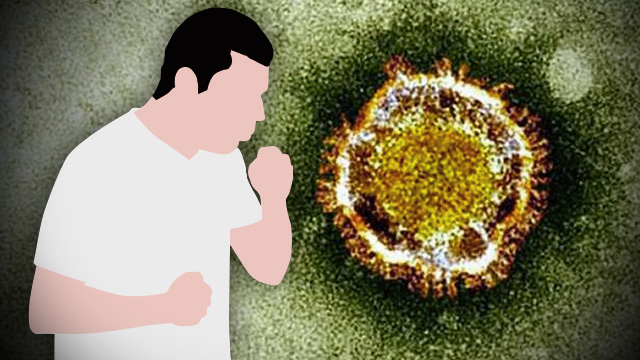
The cases in the Netherlands involve two family members who had traveled together to Saudi Arabia.
The announcement comes as the World Health Organization said the spread of the virus has become more urgent, but at least for now, is not calling it a global health emergency.
The first cases of Middle East Respiratory Syndrome were diagnosed in the Arabian Peninsula in 2012. MERS attacks the respiratory system, and symptoms can lead to pneumonia or kidney failure.
There have been 571 confirmed cases of MERS, including 171 deaths, according to the World Health Organization.
Many of the cases are in Saudi Arabia and the United Arab Emirates.
MORE AT CNN.COM
Tweede MERS-patient in Nederland

Ook zij is besmet geraakt tijdens dezelfde reis naar Saoedi-Arabië. Zij is opgenomen in Isala te Zwolle en wordt in strikte isolatie verpleegd. Haar gezondheidstoestand is stabiel. Alle mensen die contact hebben gehad met de patiënt worden door de GGD in kaart gebracht. Van deze personen wordt de gezondheidstoestand in de gaten gehouden.
De vrouw heeft in Saoedi-Arabië een bezoek gebracht aan een dromedarissenboerderij. Zij heeft nauw contact met de eerste patiënt gehad, ze deelden gedurende twee weken een hotelkamer. Daarnaast is bekend dat beide patiënten onderliggende aandoeningen hebben die hen waarschijnlijk gevoeliger maken voor een infectie met dit virus.
De GGD houdt de gezondheidstoestand van alle reisgenoten en van mensen die contact met de patiënten hebben gehad goed in de gaten. Als zij gezondheidsklachten krijgen wordt er onderzoek gedaan. Het is daarom niet uitgesloten dat er in de komende weken bij meer patiënten een infectie met het MERS-coronavirus wordt vastgesteld. Nederlandse ziekenhuizen zijn goed toegerust om deze zorg te bieden.
MERS-infecties kunnen ernstige luchtwegklachten veroorzaken, vooral bij mensen met andere gezondheidsproblemen. Ook kunnen diarreeklachten voorkomen. Mens-op-mensoverdracht van het MERS-coronavirus komt weinig voor, behalve bij nauw contact met patiënten en bij onbeschermde verpleging van ernstig zieke personen.
Meer op de website van RIVM en VWS
woensdag 14 mei 2014
MERS: five things to know
From TheStar.com, The world daily blog:
The MERS coronavirus is a distant cousin of the SARS virus and has been infecting people since as early as April 2012. Here are five things to know about this new — and potentially-deadly — disease.
This week, much of western world suddenly sat up and took notice of MERS.
No, I’m not talking about a mortgage electronic registry – in this case, MERS stands for the Middle East respiratory syndrome , a disease caused by a new virus that first emerged in Jordan in June 2012.
 The virus has been simmering ever since and watched closely by infectious disease experts. But most cases have been occurring in the Middle East, especially in Saudi Arabia, the world’s MERS hot spot with 511 cases and 157 deaths.
Last week, however, the virus showed up in the United States for the first time – and just like that, this far-away, not-our-problem story went local. Two health care workers living in Saudi Arabia (who do not know each other) travelled to Indiana and Florida, where they were diagnosed with MERS. The Indiana patient has now been released from the hospital; the Florida patient is still receiving treatment.
Now that MERS has come to America's house (and, in Canada's case, our front yard), the situation may feel more serious – and, in some ways, it is , but not necessarily because it's here.
There will be new developments with MERS in the coming weeks, months and even years. But if you're just tuning in now, here are five things to bear in mind about the mysterious virus known as MERS:
1) MERS is not SARS: Yes, there are similarities. Both are coronaviruses. Both likely come from bats. Both can cause respiratory diseases. Both spread in hospitals. Both have what infectious disease people refer to as "pandemic potential." But the two viruses that cause MERS and SARS are distantly related and the former does not spread as well as SARS, which infected more than 8,000 people in 2003. To date, the only evidence of human-to-human spread of MERS is between close relatives and amongst health care workers treating patients.

There are other differences, too, which this blog post on Popular Science sums up nicely.
2) MERS could very well show up in Canada: This does not mean the virus will take off in Canada. It only means that chances are good someone will eventually pick up the infection in the Middle East, get on an airplane, and fly to one of our 13 provinces or territories. All MERS infections to date have been linked back to the Arabian peninsula but travellers have now "exported" MERS to several countries, including the UK, Germany, France, Italy, Greece, Tunisia, Malaysia, Philippines, the U.S. and, as of today, the Netherlands . Foreign diseases have no borders, as the H5N1 bird flu recently reminded us here in Canada.
3) MERS has no vaccine or specific treatment: To date, scientists have not developed a vaccine for MERS – and they probably won't anytime soon, as Canadian Press reporter Helen Branswell explains . There is also no specific treatment for patients who catch the virus beyond supportive care.
 People can, however, reduce their risk of catching MERS by using good preventative measures, i.e. washing hands, covering up sneezes, and avoiding sick people and animals. In the Arabian peninsula, the World Health Organization is also advising people who are at high risk of contracting MERS to avoid contact with camels, as well as consuming any camel meat, milk or urine . Which brings me to my next point...
 4) MERS probably circulates in camels:
While scientists suspect MERS originated in bats, there is now a lot of evidence that camels carry the virus. Researchers have found evidence of MERS in camels (everywhere from Saudi Arabia to teh Canada Islands) and one study suggests that most camels probably catch MERS before the age of two. There is also some evidence the virus can survive in unpasteurized camel milk.
All this being said, investigators still have no idea how people could be picking up MERS from dromedary camels. Other possibilities need to be looked at too: are there other animals spreading the disease? Is MERS spread by contaminated surfaces? Is the virus more widespread in the human population than we realize?
5) MERS ain't good but it's also not the worst thing out there: To date, MERS has infected 571 people and killed 171, according to the WHO – and these figures are underestimates, since the UN health agency only counts laboratory-confirmed cases. These are scary numbers but it's also important to keep things in perspective; here are some other numbers to keep you up at night:
Diarrhea causes an estimated 800,000 child deaths every year
In 2012, 627,000 people died from malaria worldwide
At least 23,000 people die every year from drug-resistant infections in the United States alone
Heart disease killed 7 million people in 2011
Read this article with loads of hyperlinks
The MERS coronavirus is a distant cousin of the SARS virus and has been infecting people since as early as April 2012. Here are five things to know about this new — and potentially-deadly — disease.
This week, much of western world suddenly sat up and took notice of MERS.
No, I’m not talking about a mortgage electronic registry – in this case, MERS stands for the Middle East respiratory syndrome , a disease caused by a new virus that first emerged in Jordan in June 2012.
 The virus has been simmering ever since and watched closely by infectious disease experts. But most cases have been occurring in the Middle East, especially in Saudi Arabia, the world’s MERS hot spot with 511 cases and 157 deaths.
Last week, however, the virus showed up in the United States for the first time – and just like that, this far-away, not-our-problem story went local. Two health care workers living in Saudi Arabia (who do not know each other) travelled to Indiana and Florida, where they were diagnosed with MERS. The Indiana patient has now been released from the hospital; the Florida patient is still receiving treatment.
Now that MERS has come to America's house (and, in Canada's case, our front yard), the situation may feel more serious – and, in some ways, it is , but not necessarily because it's here.
There will be new developments with MERS in the coming weeks, months and even years. But if you're just tuning in now, here are five things to bear in mind about the mysterious virus known as MERS:
1) MERS is not SARS: Yes, there are similarities. Both are coronaviruses. Both likely come from bats. Both can cause respiratory diseases. Both spread in hospitals. Both have what infectious disease people refer to as "pandemic potential." But the two viruses that cause MERS and SARS are distantly related and the former does not spread as well as SARS, which infected more than 8,000 people in 2003. To date, the only evidence of human-to-human spread of MERS is between close relatives and amongst health care workers treating patients.

There are other differences, too, which this blog post on Popular Science sums up nicely.
2) MERS could very well show up in Canada: This does not mean the virus will take off in Canada. It only means that chances are good someone will eventually pick up the infection in the Middle East, get on an airplane, and fly to one of our 13 provinces or territories. All MERS infections to date have been linked back to the Arabian peninsula but travellers have now "exported" MERS to several countries, including the UK, Germany, France, Italy, Greece, Tunisia, Malaysia, Philippines, the U.S. and, as of today, the Netherlands . Foreign diseases have no borders, as the H5N1 bird flu recently reminded us here in Canada.
3) MERS has no vaccine or specific treatment: To date, scientists have not developed a vaccine for MERS – and they probably won't anytime soon, as Canadian Press reporter Helen Branswell explains . There is also no specific treatment for patients who catch the virus beyond supportive care.

 4) MERS probably circulates in camels:
 While scientists suspect MERS originated in bats, there is now a lot of evidence that camels carry the virus. Researchers have found evidence of MERS in camels (everywhere from Saudi Arabia to teh Canada Islands) and one study suggests that most camels probably catch MERS before the age of two. There is also some evidence the virus can survive in unpasteurized camel milk.
All this being said, investigators still have no idea how people could be picking up MERS from dromedary camels. Other possibilities need to be looked at too: are there other animals spreading the disease? Is MERS spread by contaminated surfaces? Is the virus more widespread in the human population than we realize?
5) MERS ain't good but it's also not the worst thing out there: To date, MERS has infected 571 people and killed 171, according to the WHO – and these figures are underestimates, since the UN health agency only counts laboratory-confirmed cases. These are scary numbers but it's also important to keep things in perspective; here are some other numbers to keep you up at night:
Diarrhea causes an estimated 800,000 child deaths every year
In 2012, 627,000 people died from malaria worldwide
At least 23,000 people die every year from drug-resistant infections in the United States alone
Heart disease killed 7 million people in 2011
Read this article with loads of hyperlinks
Hoest- en niesetiquette in de woestijn
Voor de inwoners van Saudi-Arabië legt het Ministerie van Gezondheid nog eens uit hoe je rekening houdend met je omgeving moet niesen en hoesten. Op de website van het staat een nog grotere versie.


NRC: Hoe gevaarlijk is het MERS-virus en 5 andere vragen
De eerste Nederlandse patiënt met het dodelijke longvirus MERS is opgenomen in Den Haag. Is het virus te behandelen en hoe kan je jezelf beschermen? Zes vragen en antwoorden.
 1. Wat is MERS?
2. Wat hebben dromedarissen ermee te maken?
3. Hoe wordt het overgedragen van dieren op mensen?
4. Hoeveel mensen zijn tot nu toe besmet?
5. Hoe wordt MERS behandeld?
6. Hoe kan je jezelf beschermen?
Hier de vragen, op nrc.nl de antwoorden

2. Wat hebben dromedarissen ermee te maken?
3. Hoe wordt het overgedragen van dieren op mensen?
4. Hoeveel mensen zijn tot nu toe besmet?
5. Hoe wordt MERS behandeld?
6. Hoe kan je jezelf beschermen?
Hier de vragen, op nrc.nl de antwoorden
RIVM persbericht: Eerste MERS-patient in Nederland

MERS-infecties kunnen ernstige luchtwegklachten veroorzaken, vooral bij mensen met andere gezondheidsproblemen. Ook kunnen diarreeklachten voorkomen. Mens-op-mensoverdracht van het MERS-coronavirus komt weinig voor, behalve bij nauw contact met patiënten en bij onbeschermde verpleging van ernstig zieke personen.
Sinds 2012 is er een uitbraak van het nieuwe MERS-coronavirus (Middle East Respiratory Syndrome) in het Midden-Oosten. Inmiddels zijn ruim 500 patiënten in het Midden-Oosten gemeld bij de Wereldgezondheidsorganisatie. In april en mei 2014 is er een forse toename in het aantal meldingen in het Midden-Oosten. Verreweg de meeste meldingen komen uit deze regio (vooral Saoedi-Arabië, maar ook Qatar, Jordanië, Oman, Jemen en Verenigde Arabische Emiraten).
Sinds vorig jaar zijn er ook enkele patiënten vastgesteld in het Verenigd Koninkrijk, Frankrijk, Italië, Griekenland, Filippijnen, Maleisië, Koeweit, Tunesië, Duitsland, Egypte en de Verenigde Staten. Dit waren reizigers die besmet zijn geraakt in het Midden-Oosten.
Het is niet onverwachts dat er nu ook een patiënt in Nederland is. MERS-coronavirus was daarom al een meldingsplichtige infectieziekte.
BRON
NOS: Eerste MERS-patient in Nederland

De man werd begin deze maand ziek in Saudi-Arabië, waar hij Mekka en Medina bezocht. Bij zijn terugkomst op 10 mei werd hij opgenomen in het MCH Westeinde in Den Haag. Gisteren bleek dat hij besmet is met het MERS-virus.
De toestand van de man is stabiel. Hij wordt volgens het ziekenhuis in strikte isolatie verpleegd. Alle mensen die sinds zijn terugkeer contact met hem hebben gehad, worden in kaart gebracht en in de gaten gehouden.
Meer bij NOS
CNN: MERS outbreak becomes more urgent, WHO says

But it does not constitute a global health emergency at this point, a WHO committee determined.
Declaring an emergency is "a major act" that can "raise anxieties," said Dr. Keiji Fukuda, the organization's assistant director-general for health security.
Despite concerns about the syndrome, researchers have not found "any increasing evidence of person-to-person transmissibility," he said.
There have been 571 confirmed cases of MERS, including 171 deaths, according to the World Health Organization. The number of countries with confirmed cases expanded to 18, with a case in the Netherlands.
Many of the cases are in Saudi Arabia and the United Arab Emirates.
Meer bij CNN
Over dit blog

Het virus kan ernstige ziekteverschijnselen veroorzaken, vooral bij mensen met andere gezondheidsproblemen.
Het virus dankt zijn naam aan de regio waar het voor het eerst is opgedoken en waar de meeste gevallen vandaan komen, het Midden-Oosten.
Vandaag, op 14 mei 2014, werd in Nederland een eerste patient in het ziekenhuis opgenomen die besmet is met het MERS-virus. Nederland werd daarmee het 18e land waar het virus werd vastgesteld.
Dit blog stelt zich ten doel de berichtgeving over MERS in Nederland te volgen en nieuwe ontwikkelingen rondom het virus in de gaten te houden.
Zoiets deden we eerder in een blog over AH1N1 ( de zogenaamde Mexicaanse griep) dat tussen 2009 en 2011 in een behoefte bleek te voorzien.
Abonneren op:
Reacties (Atom)